



Note: Please check your Spam or Junk folder, in case you didn't receive the email with verification code.

 English
Non-Linear: Random Order
Equip students with technical knowledge to protect and defend against cyber threats.
Develop skills to plan, implement, and monitor cyber security mechanisms.
create responsible digital citizens who contribute to a healthy cyber security ecosystem.
Understanding of Cyber Security Concepts: Grasp the basics of cyber security, including threat landscapes, cyber crimes, and remedial measures.
Technical Proficiency: Gain skills in scripting, network security, operating systems, and database security.
Practical Application: Apply security concepts in real-world scenarios, including ethical hacking and vulnerability assessments.
Technical Skills: Scripting (Python, PowerShell), network security, operating system security, and database security.
Analytical Skills: Identifying vulnerabilities, analyzing threats, and implementing security measures.
Problem-Solving Skills: Developing solutions to security breaches and preventing future attacks.
Communication Skills: Reporting cyber crimes, collaborating with teams, and explaining security protocols to non-technical stakeholders.
Cyber Security Analyst: Assess vulnerabilities and respond to security incidents.
Ethical Hacker: Identify and mitigate security vulnerabilities in systems.
Security Consultant: Advise organizations on best practices and security measures.
Incident Responder: Respond to and manage security breaches and incidents.
Security Manager: Oversee and manage an organization's security policies and procedures.
 Overview of cyber security landscape
CIA triad confidentiality integrity and availability
Types of cyber threats and attack vectors
Overview of cyber security landscape
CIA triad confidentiality integrity and availability
Types of cyber threats and attack vectors
 Unit1 MCQ Test
20 Questions
Unit1 MCQ Test
20 Questions
 For Reference: Cyber Security Intro
Duration:
Network protocols and vulnerabilities
Firewalls and intrusion detectionprevention systems
Virtual Private Networks (VPNs)
Wireless network security
Unit2 MCQ
20 Questions
Ref: Network security fundamentals
Duration:
Operating System Security
Endpoint protection
Patch management and system hardening
Virtualization and cloud security basics
Unit3 Test
20 Questions
Refer: cyber security
Duration:
Symmetric and asymmetric encryption
Hash functions and digital signatures
Public Key Infrastructure (PKI)
SSLTLS and secure communication
Unit4 MCQ
10 Questions
Ref:Cryptography an Introduction
Duration:
Access Control and Authentication
Multi-factor authentication
Access control models (DAC MAC RBAC)
Single Sign-On (SSO) and federation
Unit5 MCQ
10 Questions
Refer:Acess control models
Duration:
OWASP Top 10 vulnerabilities
Cross-Site Scripting (XSS) and SQL injection
Security headers and secure cookies
Web Application Firewall
Unit6 MCQ
10 Questions
Ref: Web application Security
Duration:
Malware Analysis
Malware detection and analysis techniques
Anti-malware strategies and tools
Unit7 MCQ
10 Questions
Malware Analysis
Duration:
Security Information & Event Management (SIEM)
Incident detection and triage
Incident response planning and execution
Digital forensics basics
Unit 8 MCQ
10 Questions
Security management, GRC
Duration:
Risk assessment methodologies
Developing security policies and procedures
Business continuity and disaster recovery planning
Compliance and regulatory requirements (e.g GDPR HIPAA)
Unit9 MCQ
10 Questions
Ref: Assessment of Risk
Duration:
Secure coding practices
Software Development Life Cycle (SDLC) security
Code review and static analysis tools
DevSecOps principles
Unit10 MCQ
10 Questions
Secure coding practices
Duration:
Mobile device management
App security and OWASP Mobile Top 10
IoT security challenges and best practices
Securing smart home and industrial IoT devices
Unit11
10 Questions
Ref:IoT security
Duration:
Cloud service models and their security implications
Shared responsibility model
Cloud-specific threats and mitigation strategies
Cloud security best practices and tools
MCQ 12 Test
10 Questions
Ref: Foundation of Privacy
Duration:
Ethical hacking methodology
Reconnaissance and scanning techniques
Exploitation and post-exploitation
Reporting and remediation
Unit 13 MCQ
10 Questions
Ref: Ethical Hacking
Duration:
Artificial Intelligence and Machine Learning in
Blockchain and its security implications
Quantum computing and post-quantum cryptography
Zero Trust security model
MCQ 14
10 Questions
Ref: Web Application Vulnerability Scanning
Duration:
Cybercrime and cyber law basics
Ethical considerations in security research
Privacy regulations and data protection
Professional ethics for security practitioners
Unit15 MCQ
10 Questions
Ref:Ethical Hacking
Duration:
Final Assessment
10 Questions
For Reference: Cyber Security Intro
Duration:
Network protocols and vulnerabilities
Firewalls and intrusion detectionprevention systems
Virtual Private Networks (VPNs)
Wireless network security
Unit2 MCQ
20 Questions
Ref: Network security fundamentals
Duration:
Operating System Security
Endpoint protection
Patch management and system hardening
Virtualization and cloud security basics
Unit3 Test
20 Questions
Refer: cyber security
Duration:
Symmetric and asymmetric encryption
Hash functions and digital signatures
Public Key Infrastructure (PKI)
SSLTLS and secure communication
Unit4 MCQ
10 Questions
Ref:Cryptography an Introduction
Duration:
Access Control and Authentication
Multi-factor authentication
Access control models (DAC MAC RBAC)
Single Sign-On (SSO) and federation
Unit5 MCQ
10 Questions
Refer:Acess control models
Duration:
OWASP Top 10 vulnerabilities
Cross-Site Scripting (XSS) and SQL injection
Security headers and secure cookies
Web Application Firewall
Unit6 MCQ
10 Questions
Ref: Web application Security
Duration:
Malware Analysis
Malware detection and analysis techniques
Anti-malware strategies and tools
Unit7 MCQ
10 Questions
Malware Analysis
Duration:
Security Information & Event Management (SIEM)
Incident detection and triage
Incident response planning and execution
Digital forensics basics
Unit 8 MCQ
10 Questions
Security management, GRC
Duration:
Risk assessment methodologies
Developing security policies and procedures
Business continuity and disaster recovery planning
Compliance and regulatory requirements (e.g GDPR HIPAA)
Unit9 MCQ
10 Questions
Ref: Assessment of Risk
Duration:
Secure coding practices
Software Development Life Cycle (SDLC) security
Code review and static analysis tools
DevSecOps principles
Unit10 MCQ
10 Questions
Secure coding practices
Duration:
Mobile device management
App security and OWASP Mobile Top 10
IoT security challenges and best practices
Securing smart home and industrial IoT devices
Unit11
10 Questions
Ref:IoT security
Duration:
Cloud service models and their security implications
Shared responsibility model
Cloud-specific threats and mitigation strategies
Cloud security best practices and tools
MCQ 12 Test
10 Questions
Ref: Foundation of Privacy
Duration:
Ethical hacking methodology
Reconnaissance and scanning techniques
Exploitation and post-exploitation
Reporting and remediation
Unit 13 MCQ
10 Questions
Ref: Ethical Hacking
Duration:
Artificial Intelligence and Machine Learning in
Blockchain and its security implications
Quantum computing and post-quantum cryptography
Zero Trust security model
MCQ 14
10 Questions
Ref: Web Application Vulnerability Scanning
Duration:
Cybercrime and cyber law basics
Ethical considerations in security research
Privacy regulations and data protection
Professional ethics for security practitioners
Unit15 MCQ
10 Questions
Ref:Ethical Hacking
Duration:
Final Assessment
10 Questions
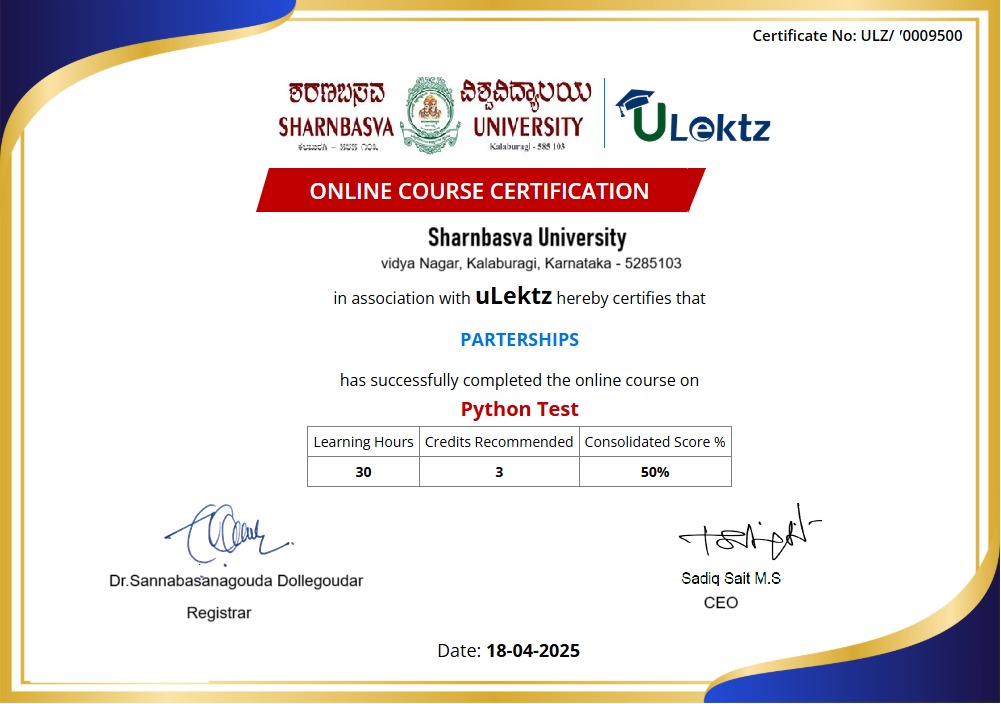
The certificate issued for the Course will have
Only the e-certificate will be made available. No Hard copies. The certificates issued by Sharnbasva University, Kalaburagi.. can be e-verifiable at www.ulektzskills.com/verify.


 90 hours Learning Content
 100% online Courses
 English Language
 Certifications
Recommended Courses
See more
 60 hours of Learning Content


60 hours of Learning Content

50 hours of Learning Content

50 hours of Learning Content

40 hours of Learning Content


 0
0




 Course Enrollment