



Note: Please check your Spam or Junk folder, in case you didn't receive the email with verification code.

 English
Non-Linear: Random Order
Course Objectives
1. Provide a solid foundation in web development concepts, tools, and technologies.
2. Develop skills in designing and building responsive, accessible, and interactive web applications.
3. Understand server-side and client-side technologies for dynamic web development.
4. Explore modern web development frameworks and best practices.
5. Prepare students for careers in web development and related fields.
Learning Outcomes
By the end of the course, students will be able to:
1. Design and develop responsive web pages using HTML, CSS, and JavaScript.
2. Build and deploy dynamic web applications using server-side technologies.
3. Integrate databases into web applications for data-driven functionality.
4. Apply modern web development frameworks for front-end and back-end development.
5. Utilize version control and collaborative tools for effective web development workflows.
Skills Developed
• Proficiency in front-end technologies (HTML, CSS, JavaScript)
• Experience in building full-stack web applications
• Database integration and management skills
• Knowledge of web security best practices
• Collaborative development using Git and project management tools
Career Pathways
• Front-End Web Developer
• Back-End Web Developer
• Full-Stack Developer
• Web Designer
• UI/UX Developer
• DevOps Engineer (Web Applications)
.
 1.1 Evolution of the Web and Web Standards
1.2 Overview of Web Development Process
1.3 Basics of Internet and Web Protocols
1.4 Overview of ClientSide VS ServerSide Technologies
1.5 Role of Web Developers
1.1 Evolution of the Web and Web Standards
1.2 Overview of Web Development Process
1.3 Basics of Internet and Web Protocols
1.4 Overview of ClientSide VS ServerSide Technologies
1.5 Role of Web Developers
 Unit1 Test
15 Questions
Unit1 Test
15 Questions
 For Reference: Inernet Technologies
Duration:
2.1 Structure of HTML Documents
2.2 Semantic HTML and Accessibility
2.3 Forms and Input Validation
2.4 Multimedia Elements
2.5 HTML APIs
For Reference: HTML essential
Duration:
Unit2 Test
5 Questions
3.1 CSS Syntax and Selectors
3.2 Responsive Design with Flexbox and Grid
3.3 CSS Animations and Transitions
3.4 Preprocessors
3.5 Best Practices for CSS Organization
Unit3 Test
20 Questions
For Reference: CSS style sheets
Duration:
4.1 JavaScript Syntax and DOM Manipulation
4.2 Event Handling and User Interaction
4.3 Introduction to ES6
4.4 Form Validation with JavaScript
4.5 Debugging JavaScript Applications
Unit4Test
20 Questions
For Refernce: Javascript
Duration:
5.1 Asynchronous Programming
5.2 Introduction to JavaScript Frameworks
5.3 State Management in Front-End Frameworks
5.4 Component-Based Development
5.5 Building Single Page Applications (SPA)
Unit5 Test
20 Questions
For Reference: Angular vs React vs Vue
Duration:
6.1 Introduction to Git and GitHub
6.2 Version Control Workflow
6.3 Setting Up Collaborative Development Projects
6.4 Using GitHub Actions for CI or CD
6.5 Code Review and Documentation Practices
Unit6 Test
20 Questions
For Reference: Code Review
Duration:
7.1 Basics of Server-Side Scripting
7.2 Building RESTful APIs
7.3 Introduction to Web Servers
7.4 Authentication and Authorization
7.5 Session Management and Cookies
Unit7 Test
20 Questions
For Reference: Server-side scripting
Duration:
8.1 Introduction to Relational Databases
8.2 NoSQL Databases
8.3 CRUD Operations in Web Applications
8.4 Database Design and Optimization
8.5 Connecting Databases to Web Applications
Unit8 Test
20 Questions
For Reference:Database Management
Duration:
9.1 Common Web Vulnerabilities
9.2 Secure Coding Practices
9.3 HTTPS and SSL Certificates
9.4 Content Security Policies
9.5 Tools for Security Auditing
Unit9 Test
20 Questions
For Reference:Web security
Duration:
10.1 Webpack Babel and Build Tools
10.2 Package Managers
10.3 Deployment Tools and Strategies
10.4 Progressive Web Apps
10. 5 Testing Web Applications
Unit10 Test
20 Questions
For Reference: Programing in Java
Duration:
11.1 Introduction to Web 3.0 and Decentralized Apps
11.2 AI and ML in Web Development
11.3 WebAssembly and Its Applications
11.4 Real-Time Web Applications (WebSockets, SignalR)
11.5 Low Code No Code Web Development Platforms
Unit11
20 Questions
For Refernce: Programming on Generative coding
Duration:
12.1 Designing and Developing a Full-Stack Web Application
12.2 Deployment of a Web Application on Cloud
12.3 Peer Review and Feedback on Projects
12.4 Case Studies of Popular Web Applications
12.5 Reflective Learning through Project Challenges
Unit12 Test
10 Questions
For Refernce:Cloud computing
Duration:
Final Assessment
10 Questions
For Reference: Inernet Technologies
Duration:
2.1 Structure of HTML Documents
2.2 Semantic HTML and Accessibility
2.3 Forms and Input Validation
2.4 Multimedia Elements
2.5 HTML APIs
For Reference: HTML essential
Duration:
Unit2 Test
5 Questions
3.1 CSS Syntax and Selectors
3.2 Responsive Design with Flexbox and Grid
3.3 CSS Animations and Transitions
3.4 Preprocessors
3.5 Best Practices for CSS Organization
Unit3 Test
20 Questions
For Reference: CSS style sheets
Duration:
4.1 JavaScript Syntax and DOM Manipulation
4.2 Event Handling and User Interaction
4.3 Introduction to ES6
4.4 Form Validation with JavaScript
4.5 Debugging JavaScript Applications
Unit4Test
20 Questions
For Refernce: Javascript
Duration:
5.1 Asynchronous Programming
5.2 Introduction to JavaScript Frameworks
5.3 State Management in Front-End Frameworks
5.4 Component-Based Development
5.5 Building Single Page Applications (SPA)
Unit5 Test
20 Questions
For Reference: Angular vs React vs Vue
Duration:
6.1 Introduction to Git and GitHub
6.2 Version Control Workflow
6.3 Setting Up Collaborative Development Projects
6.4 Using GitHub Actions for CI or CD
6.5 Code Review and Documentation Practices
Unit6 Test
20 Questions
For Reference: Code Review
Duration:
7.1 Basics of Server-Side Scripting
7.2 Building RESTful APIs
7.3 Introduction to Web Servers
7.4 Authentication and Authorization
7.5 Session Management and Cookies
Unit7 Test
20 Questions
For Reference: Server-side scripting
Duration:
8.1 Introduction to Relational Databases
8.2 NoSQL Databases
8.3 CRUD Operations in Web Applications
8.4 Database Design and Optimization
8.5 Connecting Databases to Web Applications
Unit8 Test
20 Questions
For Reference:Database Management
Duration:
9.1 Common Web Vulnerabilities
9.2 Secure Coding Practices
9.3 HTTPS and SSL Certificates
9.4 Content Security Policies
9.5 Tools for Security Auditing
Unit9 Test
20 Questions
For Reference:Web security
Duration:
10.1 Webpack Babel and Build Tools
10.2 Package Managers
10.3 Deployment Tools and Strategies
10.4 Progressive Web Apps
10. 5 Testing Web Applications
Unit10 Test
20 Questions
For Reference: Programing in Java
Duration:
11.1 Introduction to Web 3.0 and Decentralized Apps
11.2 AI and ML in Web Development
11.3 WebAssembly and Its Applications
11.4 Real-Time Web Applications (WebSockets, SignalR)
11.5 Low Code No Code Web Development Platforms
Unit11
20 Questions
For Refernce: Programming on Generative coding
Duration:
12.1 Designing and Developing a Full-Stack Web Application
12.2 Deployment of a Web Application on Cloud
12.3 Peer Review and Feedback on Projects
12.4 Case Studies of Popular Web Applications
12.5 Reflective Learning through Project Challenges
Unit12 Test
10 Questions
For Refernce:Cloud computing
Duration:
Final Assessment
10 Questions
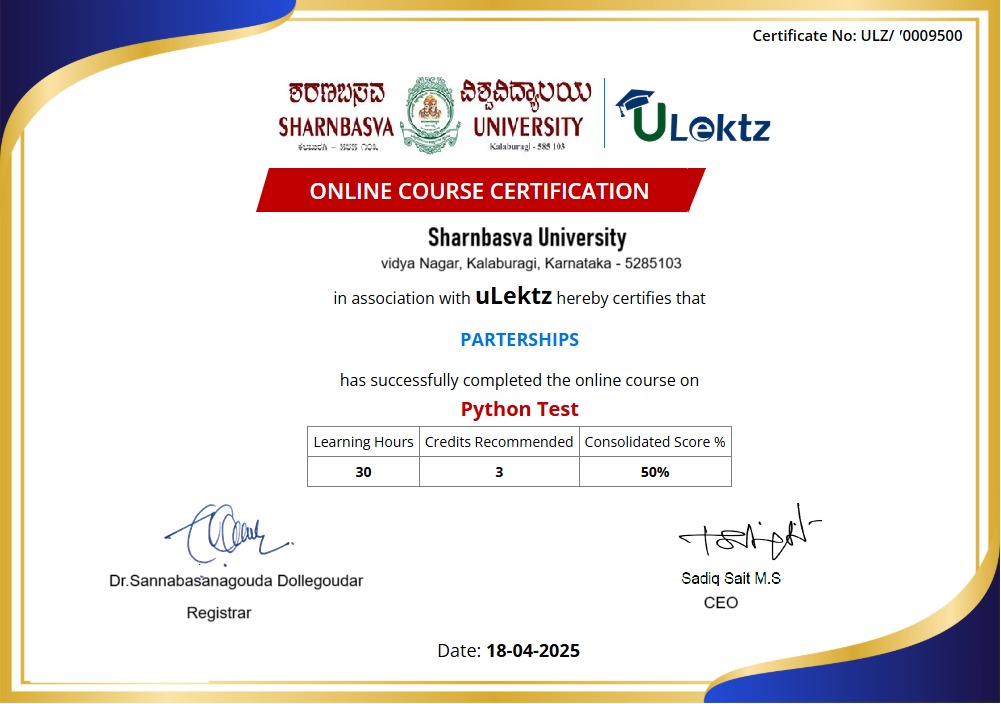
The certificate issued for the Course will have
Only the e-certificate will be made available. No Hard copies. The certificates issued by Sharnbasva University, Kalaburagi. can be e-verifiable at www.ulektzskills.com/verify.

 90 hours Learning Content
 100% online Courses
 English Language
 Certifications
Recommended Courses
See more
 60 hours of Learning Content


60 hours of Learning Content

50 hours of Learning Content

50 hours of Learning Content

40 hours of Learning Content


 0
0




 Course Enrollment